
Built Together: Lessons in Leadership from Across Ohio
Updated: Sep 17
By Vanessa Butler JD, Senior Director of Community Relations
Follow Vanessa on LinkedIn.
There is something powerful about stepping outside of your own community long enough to see it differently.
Leadership Ohio has given me the opportunity to do exactly that.

Over the past several months, our cohort has traveled to Newark, Akron, Cincinnati, Cleveland, and Dayton – meeting with military leaders, nonprofit executives, business owners, elected officials, educators, community developers, and community advocates. Each city has its own history, its own challenges, and its own identity. Yet I kept finding myself writing down many of the same ideas. Not because the conversations were repetitive, but because the principles of effective leadership resonate consistently within.
Leadership begins with curiosity.
One of the most memorable themes wasn’t solely about policy or economic development.
It was about behavior and how we process information. We’ve been challenged to remain curious – to ask better questions, to assume responsibility, and to build credibility through reliability and trustworthiness rather than authority alone. Trust is rarely built through one impressive speech or one major initiative. It is built through consistency, humility, and the willingness to keep learning alongside one another over time.
Communities are ecosystems.
One of the strongest themes throughout each session so far was that no challenge exists in isolation.
In Akron, we explored neighborhood revitalization and communities that have been divided by infrastructure. In Cincinnati, we saw how fair chance employment, transportation, housing, and second chances intersect. Cleveland challenged us to think about economic development, immigration, and talent retention. Dayton demonstrated how the military, workforce development, and local government each contribute to the health of an entire region.
Communities don’t improve off the strength or success of one organization. They improve when organizations resist operating in silos and begin working collaboratively. As someone who works alongside servant-leaders to improve outcomes for Ohio’s youngest children and families, this reinforced something I already believed: lasting change requires collaboration across sectors. Access to affordable and accessible child care affects workforce participation. Housing affects educational outcomes. Transportation affects employment. Health affects everything.
No single organization owns the solution.
Leadership is about teamwork, not individual achievement.
One note from our Dayton visit while visiting the Wright-Patterson 88th Air Force Base: “The military instills the notion of team, not individual.” This observation reached beyond military leadership.
Everywhere we went, successful leaders were building systems that would outlast them. They were developing people, sharing leadership, strengthening partnerships, and creating structures capable of sustaining progress long after they were gone.
Leadership, at its best, isn’t about becoming indispensable. It’s about making sure the mission continues to thrive even when you’re no longer in the room.
Economic development is ultimately about people.
Throughout the fellowship, we discussed investment, infrastructure, neighborhood revitalization, innovation, and workforce strategies. But the conversations that resonated deeply returned to people and their ability to understand their purpose. We heard firsthand from veterans in Dayton transitioning into civilian careers. Nehemiah Manufacturing in Cincinnati providing formerly incarcerated individuals with fair chance employment.
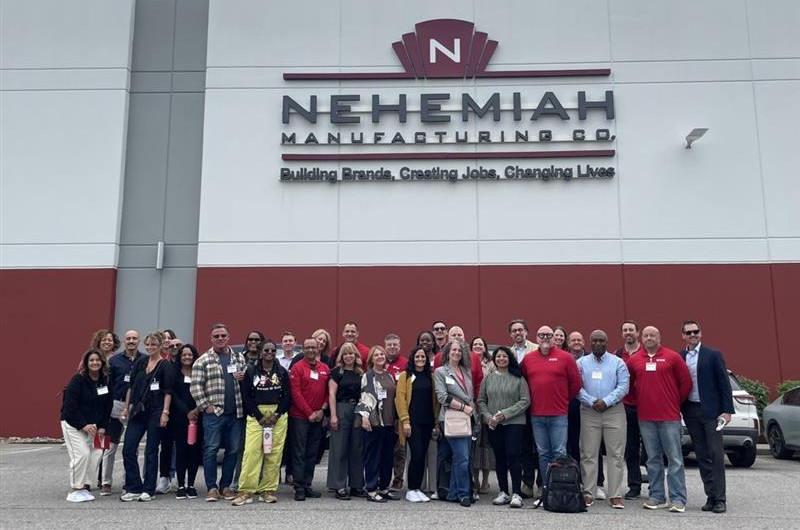
Economic development isn’t simply about attracting investment. It’s about expanding opportunity and creating pathways for people to build stable, healthy, and meaningful lives. It’s reflected in whether more people have genuine opportunities to thrive.
Near the end of one page of notes, I wrote the question:
“What goes into making a good decision as a leader?”
I don’t think Leadership Ohio is trying to give us a single answer. Instead, each community has offered a piece of it. Good decisions require curiosity. They require collaboration. They require listening to members of the community before acting. They require understanding systems and underlying inequities instead of isolated problems.
Most importantly, they require remembering that every policy, every investment, every partnership, and every strategy ultimately impacts people. As I continue my work at Groundwork Ohio, I’m leaving each session with a broader perspective and a deeper appreciation for the leaders working every day to strengthen their communities. In the remaining months of my participation in Leadership Ohio, I commit to remaining anchored in this lesson: the strongest communities are built by leaders who recognize that lasting impact is never created alone. It is built together.
Leadership Ohio is a highly selective, nonpartisan civic leadership fellowship that brings together experienced leaders from across the state for immersive learning, deep exploration of Ohio’s key challenges, and meaningful connection with influential business, community, and civic leaders.
Vanessa's acceptance into this cohort recognizes her as a professionally diverse senior-level leader with a strong commitment to community improvement.


